

Wholesalers
Our wholesalers programme helps bulk buyers meet regional factories that can supply repeat volume lines across SADC. At the Midrand show, you get structured introductions, practical floor support and guidance on the paperwork questions that usually slow orders down.
What this is for
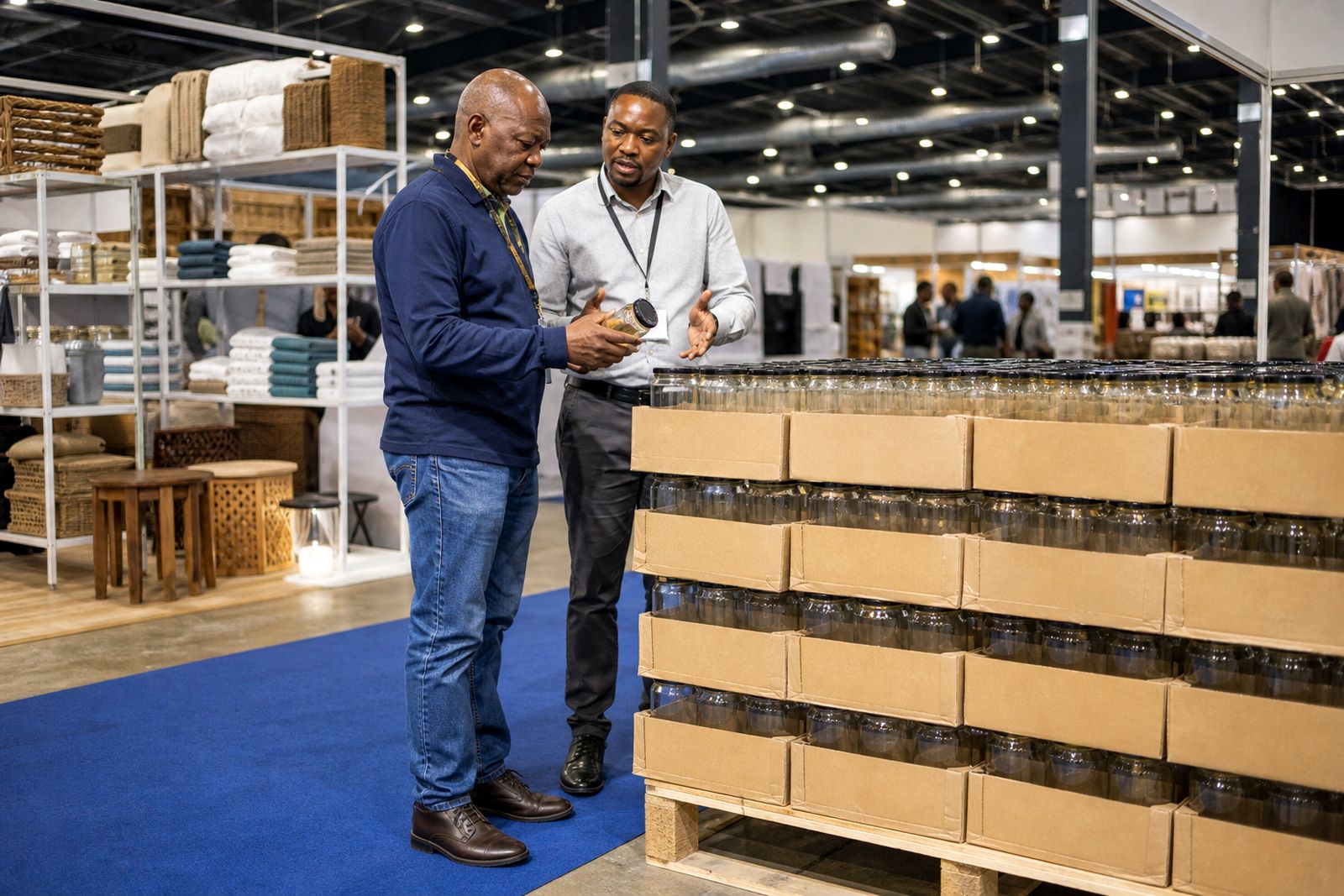
This page is for wholesalers looking for factory supply rather than once-off buying. The show brings together manufacturers from Zambia, Namibia, Mozambique and South Africa so buyers can compare product categories, pack formats, lead times and export readiness in one place. Instead of walking the floor cold, wholesalers can use our buyer support process to focus on suppliers that fit their channel, storage space and order cycle.
This works well for traders supplying independent stores, regional distribution points, cash-and-carry channels and category buyers who need continuity over several shipments. If you need pallet quantities, mixed case options, private labelling discussions, or clear answers on carton counts and dispatch timing, this is the right stream for you.
What is included for wholesalers
We do not act as a seller or take orders on behalf of factories. Our role is to organise the meetings and make the floor easier to use, so buyers can assess supply properly. On both mornings there are matchmaking sessions, and during the show there is a cross-border paperwork help point for practical trade questions.
- Pre-show buyer intake through the contact page enquiry form
- Shortlisting of relevant factory categories based on your buying brief
- Matchmaking session slots on both mornings
- Guidance on how to compare ex-works, delivered and collection-based supply conversations
- Access to the cross-border paperwork help point for document and shipment queries
- On-floor support so you can keep meetings on time and move between exhibitors efficiently
Where a wholesaler covers more than one region or format, we can group meetings by category or by route to market. That saves time and keeps your note-taking cleaner, which matters when you are comparing several factories in one morning.
How the process works
The process starts when you send an enquiry through our contact page. Give us a clear buying outline with the product categories you want, the quantity range you normally move, and whether you need house-brand, plain-pack or manufacturer-labelled goods. We then place you in the wholesalers stream and prepare suitable meeting options for the show.
- Step 1: Send your enquiry with your category list, volume range and target markets.
- Step 2: We review your brief and identify suitable factory profiles exhibiting at the Midrand show.
- Step 3: We arrange your matchmaking session times on both mornings.
- Step 4: You attend the show, meet the selected factories and inspect samples, packs and specifications.
- Step 5: You use the paperwork help point where cross-border questions come up.
- Step 6: After the show, you follow up directly with the factories you want to progress.
Meetings are most useful when buyers arrive with a defined brief. A broad request like "general groceries" or "building lines" usually leads to wasted slots. A tighter list gets better results and faster pricing conversations.
What you should prepare before you arrive
Bring the commercial information a factory needs to judge whether your enquiry is workable. Manufacturers usually need a sense of your order rhythm, your packaging needs and the route the goods will take after collection or dispatch. If you are still testing a category, say so early. It helps avoid unrealistic minimums and it saves time for both sides.
- Product list with preferred sizes, flavours, colours or variants where relevant
- Expected order size in cartons, pallets, tonnes or container share
- Required pack format such as inner packs, outers and barcode needs
- Target selling territory and whether goods will cross a border
- Storage limits, shelf-life requirements or humidity concerns for your warehouse
- Any sample approval needs before first order placement
If you need goods suited to coastal humidity, long inland transport, or repeated handling through a wholesale chain, make that clear. Packaging strength and pallet configuration can make a real difference, and buyers often leave this too late. Bring a notebook or a simple comparison sheet because by the third or fourth meeting small details start to blur a bit.
How pricing is usually worked out
We do not set exhibitor prices, but we do help wholesalers approach pricing discussions in a practical way. Most factory conversations will start with product specification, order quantity and pack format. From there the supplier can indicate whether pricing changes at carton level, pallet level or for larger repeat runs. Delivery method also matters, especially if goods are moving from another SADC country into South Africa or onward into your own market.
Useful price comparisons usually cover the base product price, packing format, minimum order quantity, dispatch lead time and who carries transport responsibility. Ask whether the quote assumes collection, consolidated delivery to Midrand, or another dispatch point. Also ask what can change after sample approval, because label edits, stronger cartons or different pallet stacking can affect the landed figure.
For wholesalers, the right price is not always the lowest unit price. It must fit your warehouse handling, stock turn and cash cycle. A slightly higher factory price with cleaner packing and fewer breakages can work out better across repeated orders.
After the show and ongoing support
Once your meetings are done, the next step is disciplined follow-up. We recommend that wholesalers rank suppliers by suitability within a day or two while discussions are still fresh. Keep one sheet per factory covering product fit, lead time, pricing structure, packaging notes and any document questions raised at the show. That makes later comparison much easier.
Our aftercare is practical rather than intrusive. We can point you back to the relevant show stream, remind you of the documentation topics covered at the paperwork help point, and help you understand how to prepare for a second conversation with a factory. The commercial negotiation remains between you and the manufacturer.
If you are building a new line, start with the factory that matched your brief most closely instead of chasing too many options at once. It keeps testing manageable and usually leads to better decisions, even when the first quote is not the one you expected.
What our Exporter Trade Show customers say
Verified Google reviews
Questions we get asked
Can a wholesaler attend if we buy across more than one product category?
Yes. Send your category list and buying priorities in your enquiry so meetings can be grouped sensibly. It helps to separate core repeat lines from trial lines.
Do you provide the factory price lists before the show?
Pricing is handled by each exhibiting manufacturer. Exact figures usually depend on specification, pack format, quantity and delivery terms, so most buyers get the best value from discussing pricing in the meeting itself.
Can you help with cross-border document questions?
Yes. The show includes a cross-border paperwork help point on the floor where buyers and factories can raise practical shipment and document questions linked to their discussions.
Also worth a look

Exhibit or come to buy
Send a note through our contact form telling us whether you are a factory that wants to exhibit or a wholesaler or retailer coming to buy, and our team will reply with the next steps.
Open the contact form