

Cross-border paperwork help
On the show floor, exhibitors can get practical help with the paperwork that often slows a cross-border trip into Midrand. This section explains the kinds of documents and temporary entry questions we cover, and where to start before you travel.
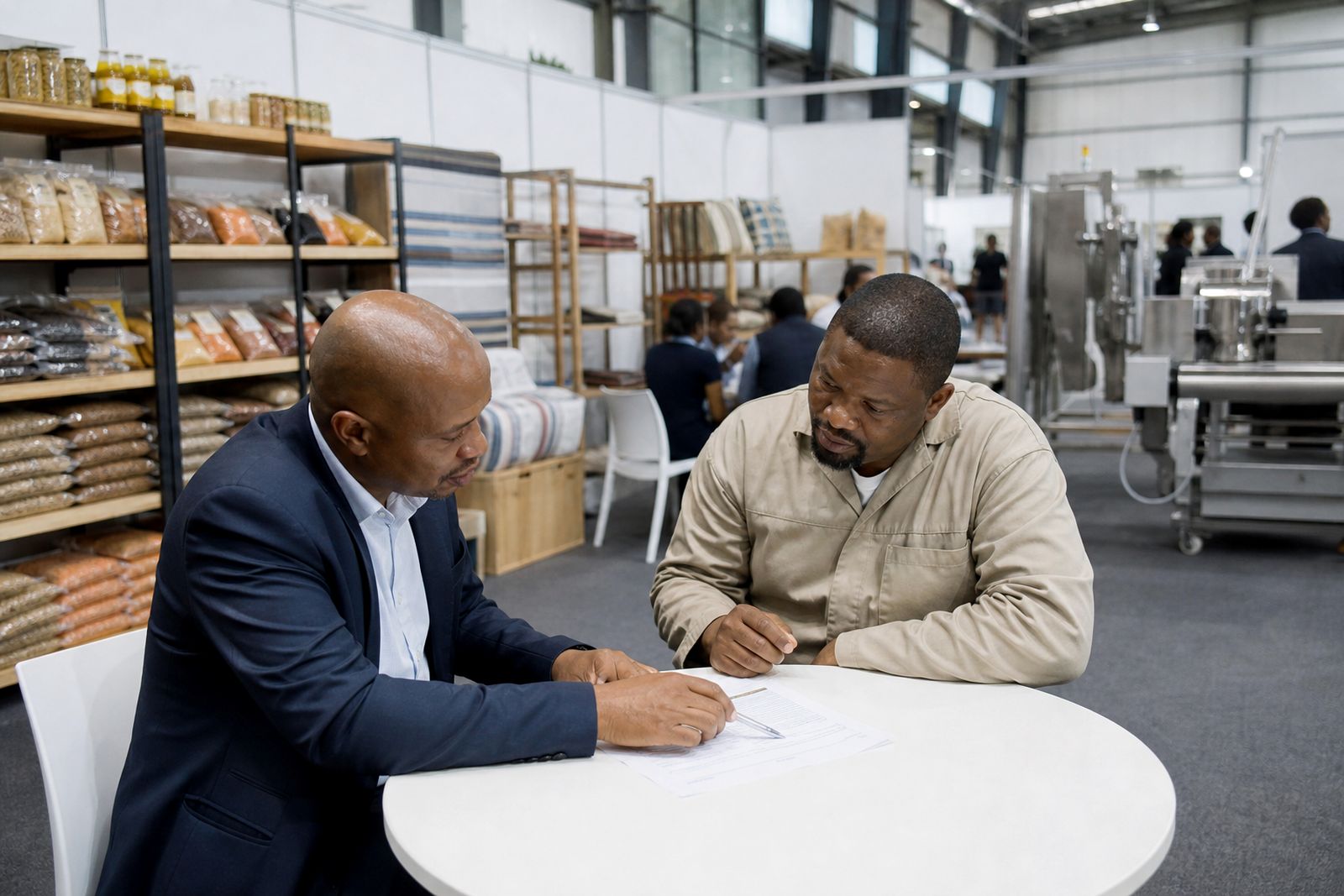
What this help point covers
Our cross-border paperwork help point is there for exhibitors coming to the Midrand show from around the SADC region, including Zambia, Namibia, Mozambique and South Africa. The focus is practical: the documents that travel with your goods, the difference between stock and samples, and the common paperwork gaps that cause delays at borders or on arrival at the venue.
This is not a counter for filing on your behalf or clearing cargo for you. It is a place to check what you have prepared, spot missing items early, and understand which route fits your goods. If you are bringing display items, sales stock, catalogues, packaging, or sample units, this section will help you choose the right guidance before you leave home.
Choose the right topic before you travel
Most exhibitors fall into one of two groups. The first group is bringing goods for sale or firm buyer orders. The second group is bringing display material or samples that will return home after the show. Starting with the right topic saves time because the paperwork trail is often different, even when the goods look similar.
- Go to Export documents if you are moving saleable goods, stock for delivery, packaged products for wholesale discussions, or commercial consignments linked to invoices.
- Go to Samples and temporary imports if you are bringing sample items, demonstration units, display pieces, swatches, or equipment that is coming back with you after the event.
- Ask at the help point if your shipment includes both sale stock and samples in the same load, as these often need to be separated clearly on paperwork.
If you are unsure, rather classify each item line by line before departure. A mixed consignment can still work well, but only if the supporting documents make the purpose of each item clear.
Export documents compared with temporary entry
The most common mistake is treating all show goods the same. A carton of products intended for a buyer is not handled in the same way as a display unit that returns after the event. Our help point can talk you through the differences and help you check whether your paperwork matches the purpose of the goods.
- Commercial goods: usually linked to invoices, packing details, product descriptions and consignee information.
- Temporary items: usually need clear identification of each item, declared temporary purpose and a plan for return after the show.
- Samples with no sale at the show: should still be listed properly, with realistic descriptions and quantities.
- Printed matter and low-value handouts: may seem simple, but should still be packed and listed sensibly so they do not cause confusion during inspection.
A good rule is this: if an officer or receiving team opens the load, they should be able to match the physical goods to the paperwork without guessing. Vague wording like "parts" or "display goods" often creates problems, so item descriptions need to be clear and plain.
Common paperwork problems we help you avoid
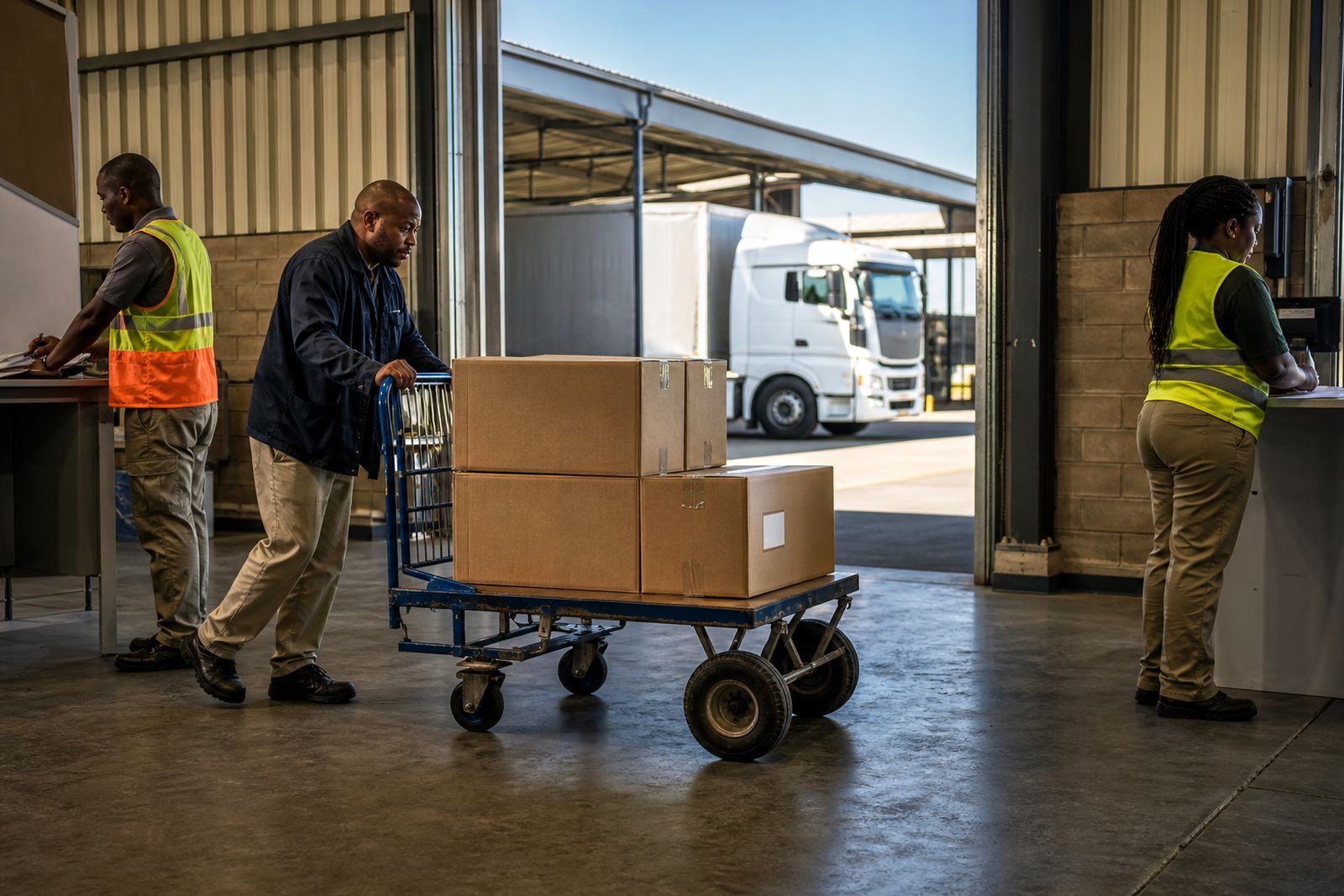
Border delays often come down to a few repeated issues. The help point is set up to catch these before they become expensive. That matters for exhibitors on tight delivery windows, especially when transport has to reach Midrand, unload, and set up within a short build period.
- Item descriptions that are too broad or do not match labels on cartons.
- Quantities on the packing list that differ from the actual packed units.
- Samples mixed in with sale stock without clear separation.
- Missing supporting papers for temporary entry or return movement.
- Documents packed inside sealed cartons instead of being kept accessible by the driver or operator.
We also remind exhibitors to think about practical handling. If outer cartons are likely to pick up dust, moisture or tape damage in transit, the inner item labels should still remain readable. Small steps like this make inspection easier and can save time on the day.
What to prepare for the Midrand show floor
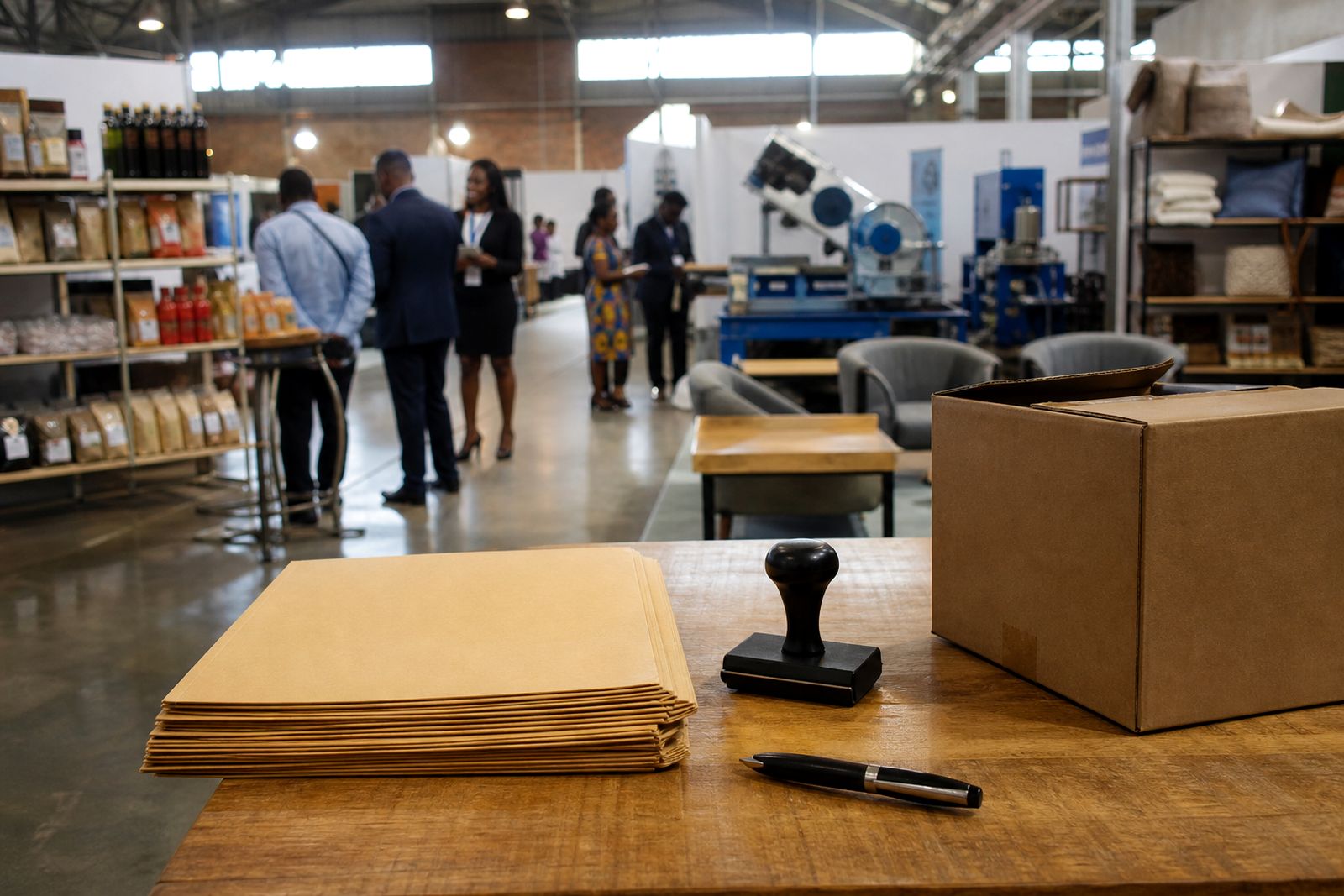
Before travelling, assemble one working set of documents for the shipment team and another set for your own show file. Keep them in order and make sure the person travelling with the goods knows what each paper is for. If a driver changes at the border, or if your operator arrives before the cartons, your file should still let the venue receiving team understand the consignment.
For Midrand conditions, plan for a busy arrival window and allow for weather shifts on the Highveld. Early mornings can be cool, afternoons can be warm, and packaging can soften or scuff if loads are handled several times. None of that changes the legal side of the paperwork, but it does affect how clearly goods can be checked on arrival.
If your load includes timber packaging, fragile samples, or unusually sized pieces over about 2 metres, sort those notes in advance so there is no confusion during unloading. It sounds basic but it helps a lot.
How to use this section
Use the pages in this section as a starting point before you set off for Midrand. Read the export documents page if your main concern is the papers that support a commercial consignment. Read the samples and temporary imports page if your goods are for display, demonstration or return after the event.
If your situation does not fit neatly into one box, use the contact page enquiry form and outline what you are bringing, from which country, and whether the goods will stay in South Africa after the show. Keep your message practical: number of cartons, type of products, whether samples will return, and any awkward items. That gives us enough to point you to the right section before you arrive.
What our Exporter Trade Show customers say
Verified Google reviews
Questions we get asked
Can the help point submit documents for us?
No. The help point gives practical guidance on what to prepare and what may be missing, but exhibitors remain responsible for their own paperwork and transport arrangements.
Should samples be listed even if they are not for sale?
Yes. Samples should still be described properly with sensible quantities and clear identification, especially if they will return home after the show.
What if our load includes both stock and display items?
That is common, but the paperwork should separate the two clearly. Mixed consignments are easier to manage when each item line shows whether it is commercial stock or a temporary show item.
Exhibit or come to buy
Send a note through our contact form telling us whether you are a factory that wants to exhibit or a wholesaler or retailer coming to buy, and our team will reply with the next steps.
Open the contact form