

Export documents
The right papers help your goods move to the show floor with fewer delays and fewer last minute corrections. Our export documents support covers the core paperwork pack, basic checks before the show, and practical help if a document needs attention on arrival.
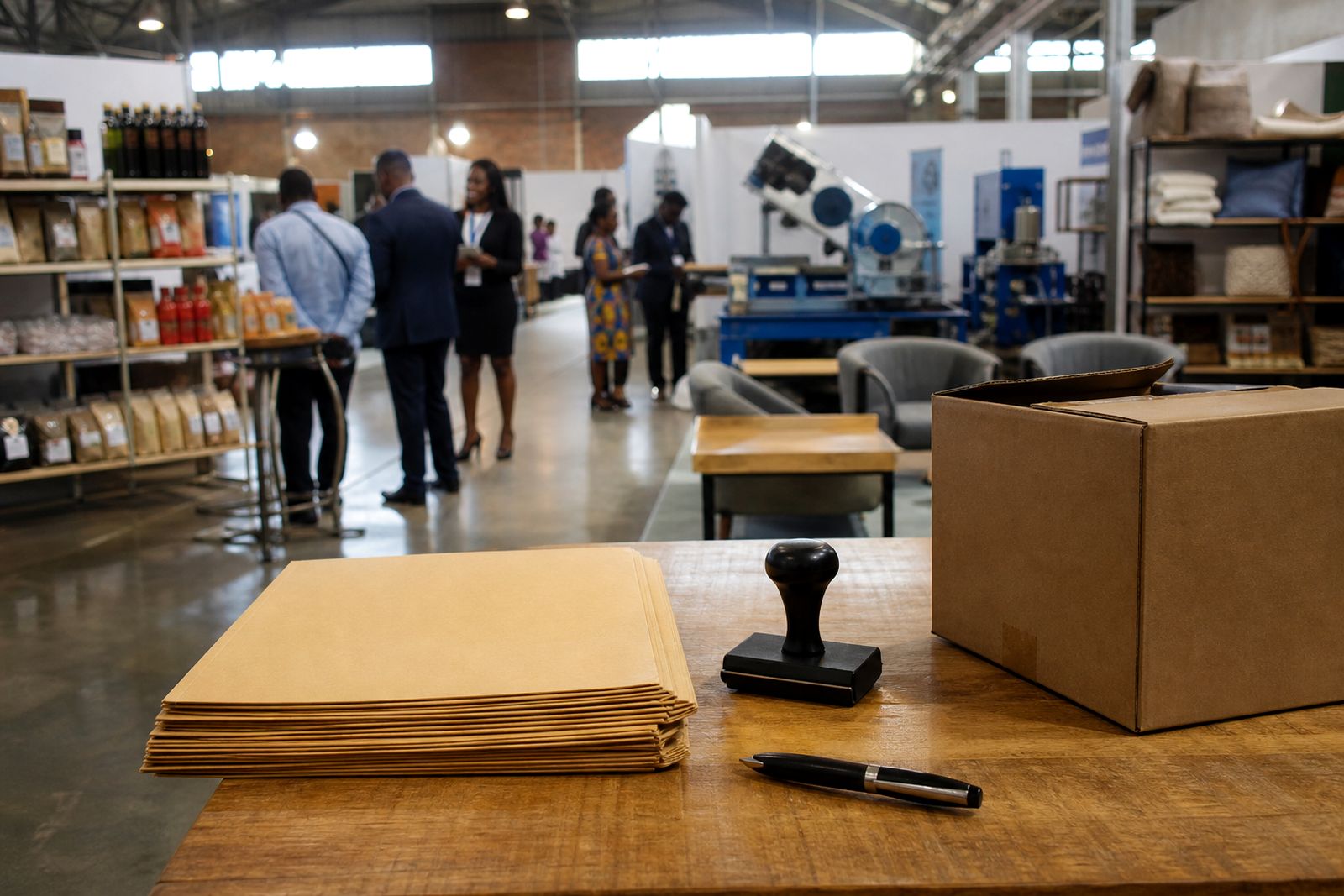
What this support includes
This page covers the document pack that usually travels with exhibit goods coming to the African Trade Show in Midrand. We help exhibitors understand which papers are commonly needed, how they fit together, and what details must match across the set. The aim is simple: goods should arrive clearly described, easy to identify and supported by paperwork that the carrier and receiving team can follow.
The help point on the show floor is there for practical guidance, not for replacing paperwork that was never prepared. That means we focus on checking for consistency before the show and helping you sort out minor issues if something on the pack needs clarification. If your consignment includes samples, display units, spares or printed material, those items should also be listed properly rather than added as a vague extra line.
- Review of the core paperwork pack for show goods
- Checks that names, quantities, weights and descriptions match across documents
- Guidance on separating sale stock from display only items
- Notes on marking cartons, pallets and sample cases so they tie back to the documents
- Support at the cross-border help point for document questions during move-in
Documents commonly needed for show consignments
The exact pack depends on the route, the carrier and the type of goods, but most exhibitors will work from a small set of core papers. These papers should be typed clearly and should match the labels on the goods. If one document says 14 cartons and another says 12 cartons, or the weights differ for no clear reason, queries can start quickly and that wastes time.
For a show consignment, the most important thing is clarity. Goods meant for display should be described as such. Samples should be separated from items intended for later sale where applicable. If a machine, stand fitting or product display has serial numbers or identifying marks, those should appear on the paperwork too where possible, this helps when units are checked on arrival.
- Commercial invoice or pro forma invoice, depending on the consignment purpose
- Packing list with carton count, pallet count, net and gross mass, and dimensions
- Transport document supplied by the carrier
- Any permits, declarations or supporting papers required for the specific goods category
- Temporary import or sample related papers where relevant
- A clear exhibitor contact note for queries during transit and move-in
How the process works step by step
We start with your enquiry through the contact page. Once we know what goods are coming, from which SADC country, and whether they are display items, samples or stock, we outline the likely document set. We then ask for your draft paperwork early enough for a practical review before dispatch.
Next, we compare the key fields across your pack. That includes consignee details, product descriptions, quantity lines, weight totals and package marks. We flag gaps, duplicates and wording that is too broad. Simple descriptions like “mixed goods” or “parts” often cause trouble because they do not tell anyone what is actually in the consignment.
After the review, you update the documents and send the revised set back. We do a final check on the show facing details and advise how many copies to travel with the goods and how many to keep with the driver, courier pouch or freight file. On arrival at Midrand, the help point can assist with explaining the pack to the receiving team if something small needs to be confirmed.
- Step 1: Send an enquiry with origin country, goods type and transport method
- Step 2: Share draft invoice, packing list and any supporting papers
- Step 3: We check consistency, item descriptions and package references
- Step 4: You issue the corrected final set and attach copies to the shipment
- Step 5: Keep a digital copy available during transit and move-in
What you should prepare before sending documents
The smoothest consignments are prepared from the carton level up. Before you send us any paperwork, make sure your packing list reflects the goods as they are actually packed. Count cartons and pallets again, weigh them properly and measure the outer dimensions in millimetres or centimetres. If you repack after the documents are drafted, the paperwork must be updated as well.
You should also decide how each item will be described. A good description is specific enough for someone who has never seen the goods before. Include material, purpose or product type where useful. For example, display shelving, garment samples, packaged food samples or small electrical components are clearer than one broad line. If the goods are sensitive to rain or coastal humidity before they reach Gauteng, pack and label them accordingly.
- Exhibitor name exactly as it must appear on the document set
- Full item list with plain language descriptions
- Accurate carton, crate or pallet counts
- Net and gross mass for each package group
- Outer dimensions for bulky items and stands
- Serial numbers or identifying marks for higher value units where applicable
- A note showing which items are samples, display only or intended for sale after the show if permitted
How pricing is worked out
Pricing for this support is usually based on the amount of checking required rather than one flat figure for every exhibitor. A simple consignment with a short item list and one transport method takes less time than a mixed shipment with multiple package types, temporary import paperwork and several rounds of corrections. We explain the scope first so you know what is included.
In general, cost is influenced by the number of document types, the number of line items, whether goods are split between samples and sale stock, and how late the paperwork arrives for review. If documents are sent through in a rushed state close to dispatch, more back and forth is often needed. Where a carrier or clearing partner asks for extra supporting detail, that falls into the same practical review process.
We do not publish fixed rates on this page. Use the enquiry form on our contact page and tell us what you are bringing, from where and how it will travel. We can then outline the likely work involved without guesswork.
Aftercare during move-in and on arrival
Document support does not end when the truck leaves or the courier collects. During move-in, the help point can assist exhibitors who need to confirm which paper sits with which package, or who need help matching package marks to the packing list. If a label has come loose or a receiving query comes up, having a clean digital copy of the final set makes a big difference.
After arrival, keep the papers with the goods until unpacking is complete and the stand is ready. Do not throw away outer labels too early. If goods are returning across a border after the show, store your inbound and outbound paperwork together from the start. That sounds obvious but it gets missed often. Good document handling also helps if a box goes missing for a few hours in the unloading area.
For exhibitors with samples and temporary imports, tidy filing matters. Keep one printed set at the stand and one set with the transport file, then keep scanned copies on a phone or laptop for quick reference if power cuts slow printing or admin on site.
What our Exporter Trade Show customers say
Verified Google reviews
Questions we get asked
Do you issue the export papers for us?
We provide guidance and practical checks on the document pack for the show consignment. The exporter and transport parties still need to issue the papers that sit under their responsibility.
Can you help if our goods are only samples?
Yes. Sample consignments still need clear descriptions, package counts and supporting papers where relevant. We also help exhibitors separate sample lines from other goods in the same shipment.
What if a problem is found when the goods reach Midrand?
Bring the shipment papers to the cross-border help point on the floor. We can help review the pack, explain how the documents tie together and point out where a correction or supporting note may be needed.
Also worth a look


Exhibit or come to buy
Send a note through our contact form telling us whether you are a factory that wants to exhibit or a wholesaler or retailer coming to buy, and our team will reply with the next steps.
Open the contact form