

Getting your goods to Midrand
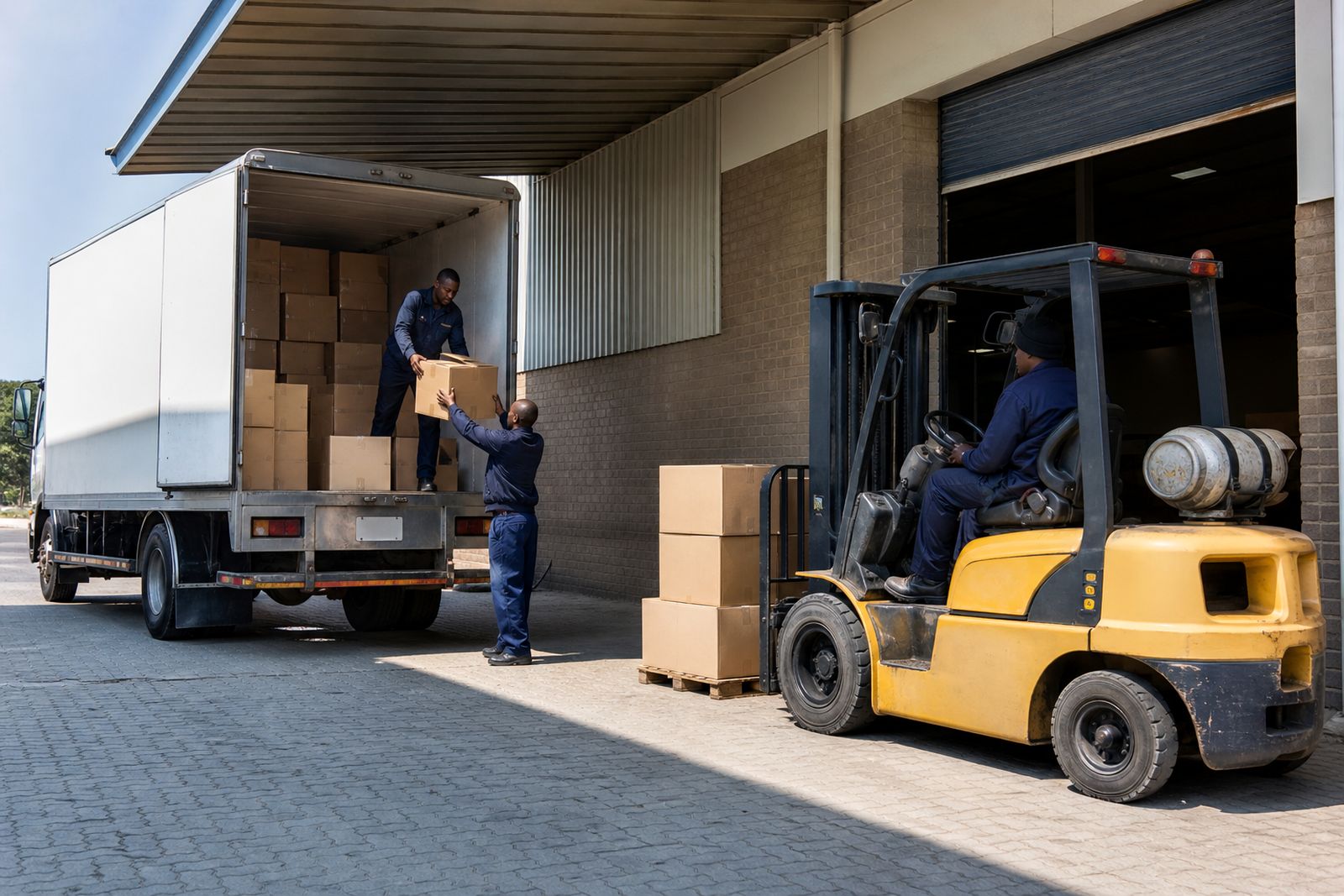
Bringing products into Midrand for the show takes more than booking a truck. We help exhibitors plan freight, samples, unloading and stand set-up so goods arrive in good order and are ready for buyer meetings.
What this support covers
This page explains the practical support available to exhibitors travelling in from Zambia, Namibia, Mozambique and within South Africa. The aim is simple: get your display stock, sample units, printed material and basic stand items to Midrand with less confusion at the border and less scrambling on the floor the day before opening.
We do not act as a freight carrier or customs agent. Instead, we guide you on what to book, what documents to prepare, how to label goods, what arrival windows to work to and what to do once your shipment reaches the Midrand site. If you are sending only hand-carried samples or a small bakkie load, the process is lighter. If you are sending pallets or a larger truck consignment, there are more checks and time buffers to allow for.
- Freight planning for road deliveries into Midrand
- Advice on samples, display stock and temporary-use items
- Delivery timing and offloading windows
- Packing and labelling guidance for easier check-in
- Stand set-up planning for exhibitors arriving from outside Gauteng
Step by step from booking to floor delivery
Once your stand package is confirmed, we ask for a simple goods summary. This includes what you are bringing, how many cartons or pallets are involved, approximate weights, whether anything is fragile, and whether any items need power, shelving or extra handling. From there, we issue the exhibitor logistics notes for the Midrand show cycle.
Next, you choose how your goods will travel. Some exhibitors send a shared load with a transport provider. Others send a dedicated vehicle, or bring stock in person. We help you match the method to the size of your consignment and the amount of set-up time you will need. If your products include breakables, liquids or unusually shaped items, we flag that early so packaging can be adjusted before dispatch.
Before departure, you prepare your paperwork pack and mark every package clearly. When the goods reach Midrand, they are checked against your exhibitor details and directed to the correct unloading point. From there you or your appointed crew move items into the stand area and complete your set-up.
- Confirm stand details and estimated cargo volume
- Choose transport method and planned arrival day
- Prepare paperwork, labels and packing list
- Dispatch goods with enough time for border delays
- Arrive during the assigned unloading window
- Move stock into the stand and complete merchandising
What you need to prepare before dispatch
The smoother shipments are usually the ones prepared with plain, detailed paperwork and sensible packing. Every carton, crate or pallet should match your packing list. If one label says 8 cartons and the truck arrives with 10 loose boxes, delays are more likely. For samples, it helps to separate display-only items from stock intended for orders or follow-up distribution.
Please prepare a clear inventory with product descriptions that a border official can understand quickly. Avoid vague wording such as “assorted goods” where a more specific line would do. It is also worth keeping printed copies with the driver and digital copies with your team, because signal can be patchy on the road and last minute forwarding often causes mix-ups.
- Packing list with carton count, pallet count and gross weight
- Commercial invoice or pro forma invoice where required
- Consignee details as provided in the exhibitor notes
- Stand number and exhibitor name on every package
- Separate list for samples and display equipment if applicable
- Basic handling notes such as fragile, keep upright or dry storage
If your stand includes powered display units, bring extension leads, plug adaptors and a simple load list for your own equipment. Midrand weather can swing during transport and unloading so moisture protection matters, especially for printed cartons, timber samples, paper labels and textile goods. A little extra wrapping saves trouble later.
Samples, temporary-use items and small consignments
Many exhibitors do not need a full truckload. They bring sample ranges, one or two display units, catalogues and a few cartons of packaged goods. For these consignments, the key question is whether the items are for display only, for demonstration, or for immediate sale or transfer after the show. That affects how you should describe them in your documents and how carefully quantities must be tracked.
Display samples should be easy to count in and count out. If you bring 24 sample pieces, you should be able to account for those same 24 pieces on the return leg or explain what happened to each item. This sounds obvious but it often gets missed when the team is tired and packing late.
Smaller loads are also more exposed to damage if they are mixed loosely with stand décor and printed matter. Use stackable cartons, internal cushioning and weather-resistant outer wrapping. If an item has glass, polished metal or finished edges, crate it properly rather than relying on bubble wrap alone.
How pricing is worked out
We do not publish one flat logistics price because every exhibitor shipment is different. Costs depend on where the goods start, how much space they take up, whether you need dedicated handling, and how much on-site support is required during unloading and set-up. A small sample consignment carried in by your team is naturally simpler than multiple pallets arriving on a shared vehicle.
In general terms, the biggest pricing factors are distance, cargo size, weight, packaging type, border processing time, delivery timing and labour needed on site. If your goods need special lifting gear, strict stacking limits or repeated access during the show, that will also affect the final cost picture. We explain these items in plain terms so exhibitors can budget properly before dispatch.
- Origin point and route into Midrand
- Number of cartons, crates or pallets
- Approximate mass and volumetric size
- Manual handling versus pallet handling
- Urgent delivery windows or late arrivals
- Return collection needs after breakdown
On-site set-up and aftercare
Once your goods have reached the venue loading area, the last stretch still matters. We recommend arriving with a simple set-up plan showing where stock, samples, brochures and storage boxes will sit in the stand. This cuts down on re-handling and keeps the front of the stand open for buyer conversations. If you need to keep reserve stock behind the display, pack it in cartons that can be opened and reclosed neatly.
After the show, we provide the breakdown notes for outbound collection, hand-carried removals and unsold sample packing. The most important thing is to reconcile what came in against what is leaving, especially for exhibitors crossing a border again. Missing labels and half-packed cartons create the biggest end-of-show headaches, and by then everyone is in a rush.
If anything changes while you are planning your shipment, use the enquiry form on our contact page as early as you can. Last minute changes can usually be managed, but transport and unloading options get tighter close to move-in. Early planning saves money and stress, simple as that.
What our Exporter Trade Show customers say
Verified Google reviews
Questions we get asked
Can we bring samples ourselves instead of sending freight?
Yes. Many exhibitors bring smaller sample ranges in person. You should still prepare a clear packing list and label everything so check-in and pack-out are easier.
Do you clear goods through the border for us?
We provide practical guidance and a show-specific process, but we do not act as the carrier or customs agent. Your transporter or appointed clearing party remains responsible for formal border processing.
What if our truck is delayed on the way to Midrand?
Tell us through the contact page as soon as you know. We can advise on the next unloading window and the best way to protect your set-up time if the delay is significant.
Also worth a look
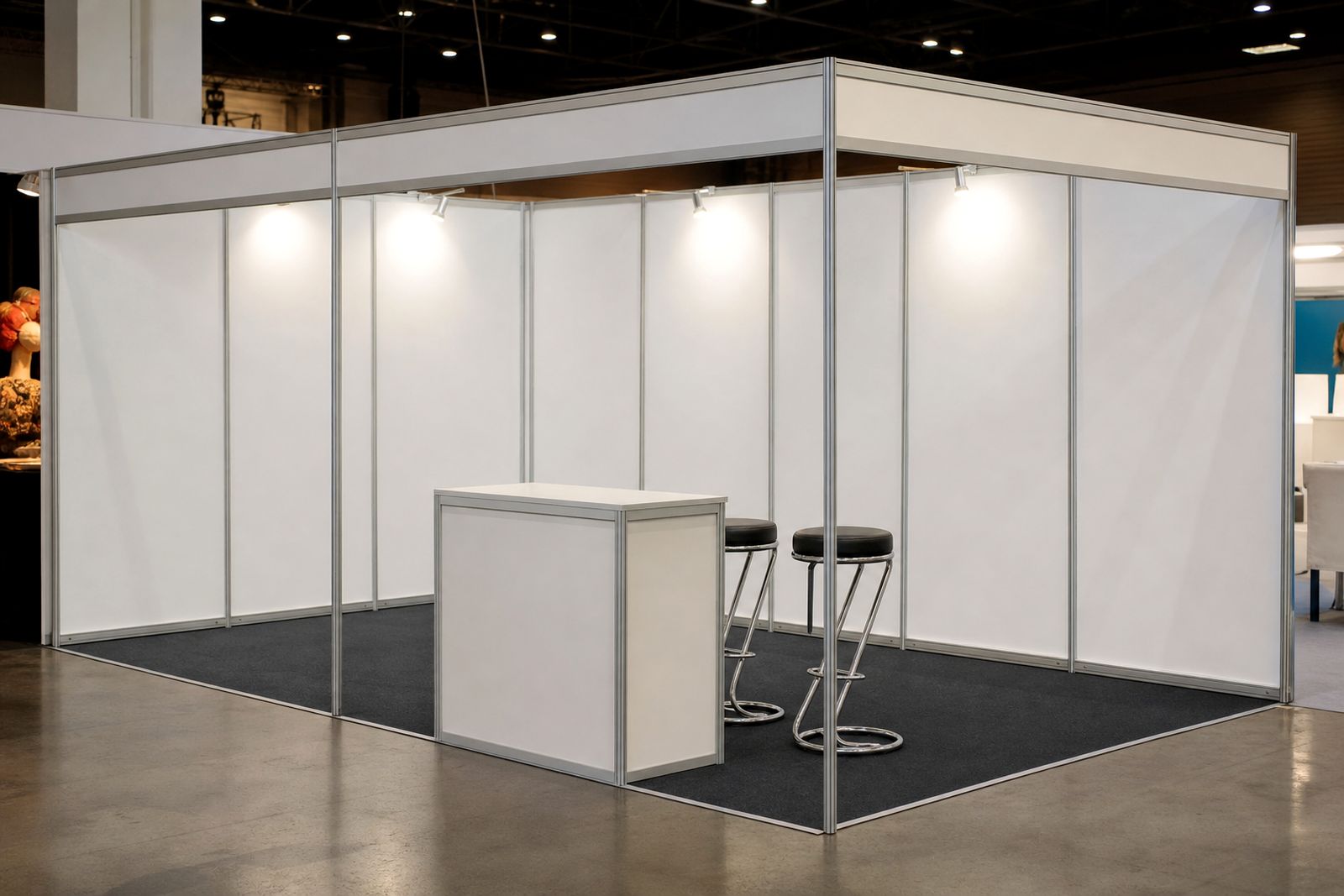
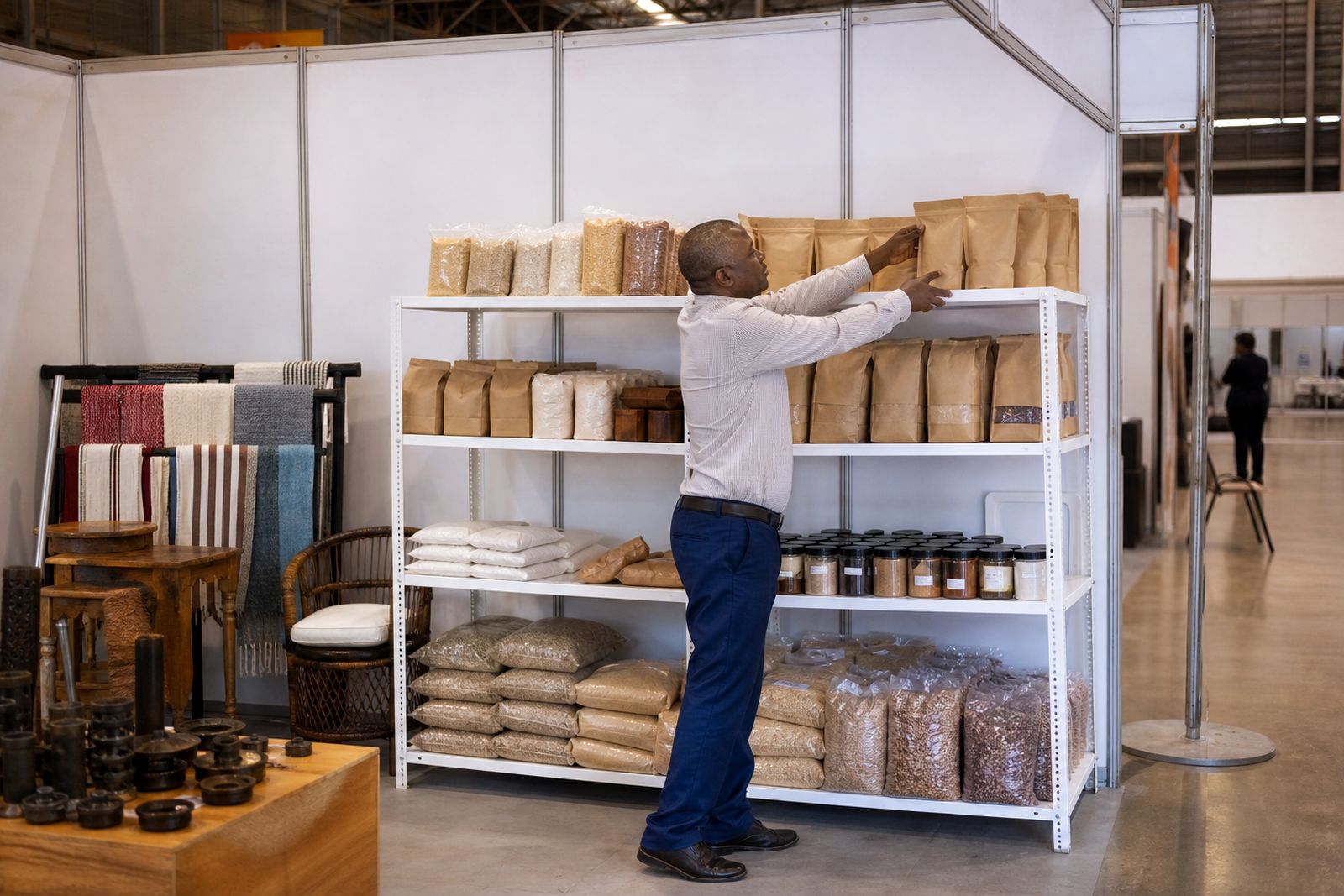


Exhibit or come to buy
Send a note through our contact form telling us whether you are a factory that wants to exhibit or a wholesaler or retailer coming to buy, and our team will reply with the next steps.
Open the contact form